Joyi
A mental health education app that builds resilience in youth through bite-sized, science-backed lessons, designed around a non-human companion anyone could relate to.
CLIENT
Colorful Zone (in-house)
YEAR
2023-2024
ROLE
Creative Lead
SCOPE
brand Design, Character design, UI Design
Brief
A mental health app for youth that teaches resilience before crisis, not after it, built on EEG brainwave research. The design problem was translating brainwave-based resilience training into something a 12-year-old would actually want to use, in a category that often feels clinical, educational, or too much like therapy.
Approach
The metaphor came first. Instead of explaining EEG, brainwave types, and resilience through clinical language, we gave the science to Joyi. A character everyone could project themselves onto.
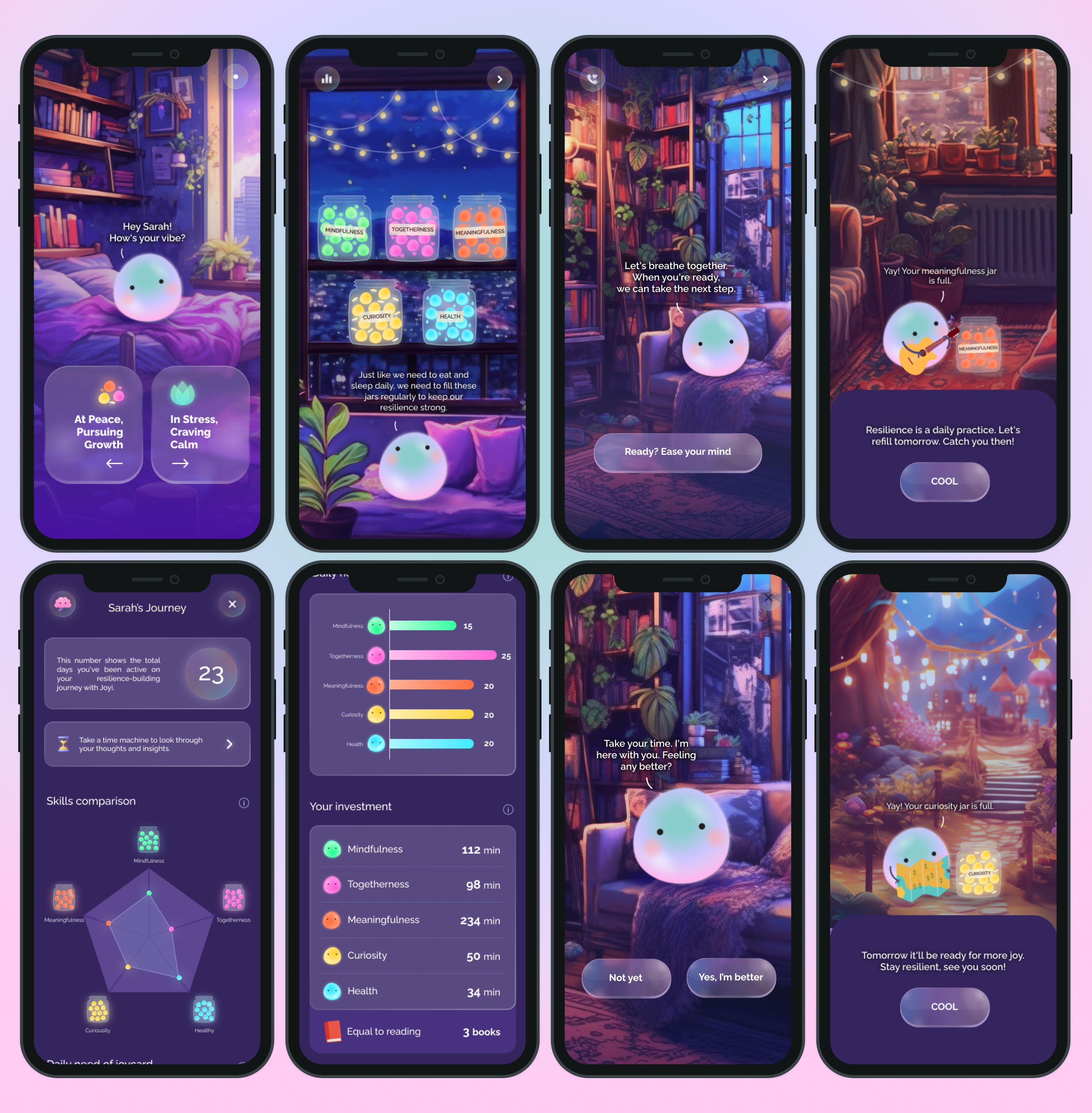
Joyi carries five jars. Each jar represents a different brainwave state that needs to stay full for Joyi to feel resilient and less stressed. The user’s role is simple: help Joyi keep the jars full.
That one mechanic turned a dense neuroscience concept into something visual, emotional, and easy to understand in seconds.
From there, the format followed. Instead of traditional lessons, the app uses a swipe-up feed inspired by TikTok and Reels. Each swipe reveals a bite-sized piece of content, and each completed lesson adds to one of Joyi’s jars.
The science stays underneath. On the surface, it feels familiar, playful, and light. A resilience tool designed not to feel like therapy, school, or homework — but like helping a little glowing companion feel okay.

App Design

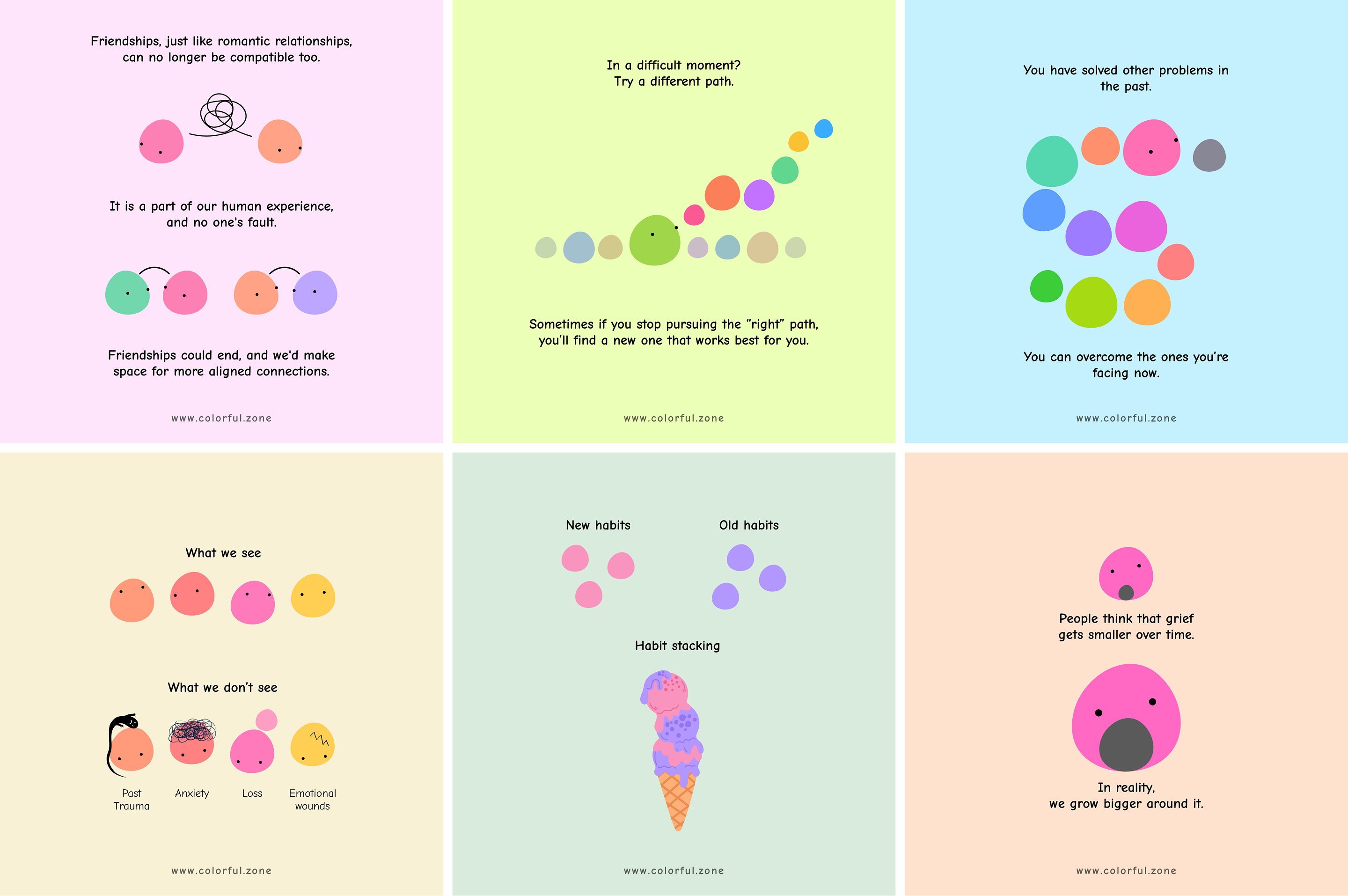
Social Media

Merchandise
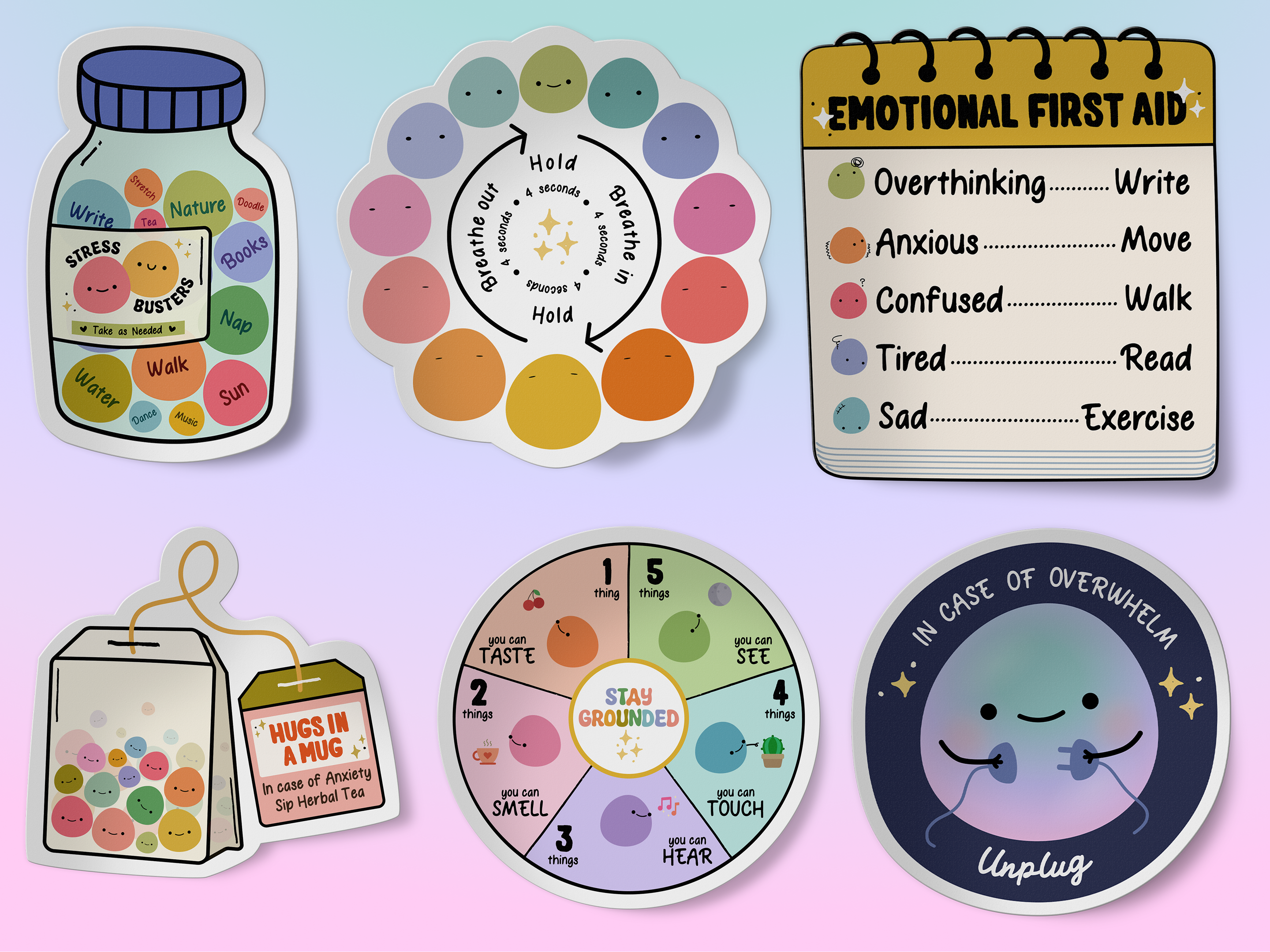
The merchandise line extended Joyi from a screen companion into a physical one. Users could put the character on their laptop, their wall, their morning routine.
Outcome
Joyi reached 12,000+ users within six months of launch. A research collaboration with Seneca College measured the app's impact on student users and found a significant reduction in anxiety levels, turning what could have been a soft "wellness" claim into evidence. Users didn't describe Joyi as an app. They described it as a companion. That was the test the design had to pass.